Hey buddy…do you want to publish articles like this on gbhardwaj.com?
If yes, then send your article (with images) to gauravbhardwaj@rjit.ac.in
Also, scan the QR code or click the link below to join the WhatsApp group for regular updates.
https://chat.whatsapp.com/ISKFnc0OvoM1W7bAvybWPG

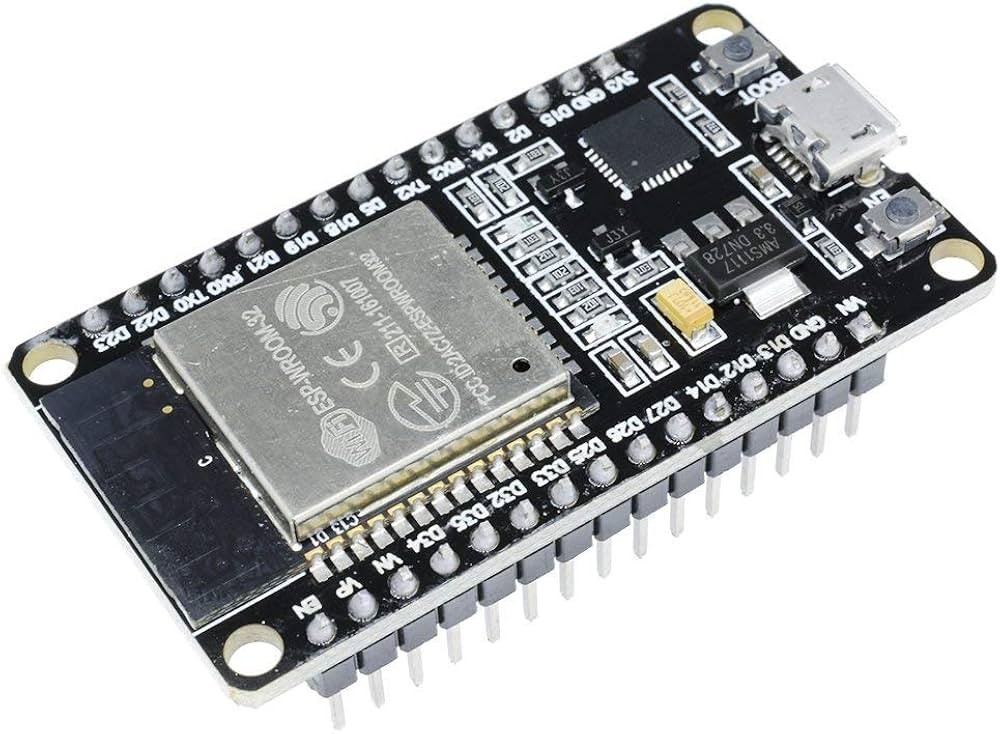
Getting Started with the ESP32 Microcontroller
Imagine a network of tiny sensors spread across a city, a farm, or even a rainforest – all talking wirelessly for miles on a small battery. This is the exciting promise of LoRa and LoRaWAN. These technologies let “Internet of Things” devices send small bits of data over long distances with very little power. As a new engineering student, you can tap into this wave of innovation. Long-range wireless systems like LoRa are already powering smart homes, smart cities, and remote sensors in places without Wi-Fi or cell coverage. The idea that your project could one day monitor soil moisture in a distant field or track wildlife far from any tower is thrilling!
What is LoRa?
LoRa (short for “Long Range”) is a wireless radio technology designed for low-power devices. Unlike Wi-Fi or Bluetooth, which cover tens of meters at high speed, LoRa trades speed for distance and efficiency. LoRa sends tiny packets of data at low bit rates, but those packets can travel for kilometers. For example, LoRa can reach 10–15 km in open rural areas (and several kilometers in cities) while using extremely little energy. In fact, LoRa radios are so efficient that a sensor can run for years on a small coin-cell battery.
LoRa achieves this by using a special spread-spectrum modulation. It encodes data as “chirp” pulses on the radio wave, a bit like a rising or falling tone. This chirp spread spectrum design makes the signal very robust against interference and lets it reach very far. The result is a radio that works in sub-gigahertz bands (433–915 MHz) with a high “link budget,” meaning it can punch through buildings and noise. In simple terms, LoRa is the physical layer – the actual radio signal – designed for long reach and low power.
LoRa vs. Wi-Fi and Bluetooth
How is LoRa different from the Wi-Fi and Bluetooth on your phone? The biggest differences are range, data rate, and power use. Wi-Fi gives you very fast data (tens or hundreds of Mbps) but only covers tens of meters indoors, and it draws a lot of power. Bluetooth is designed for short links (a few meters) and ultra-low power (for wearable devices). In contrast, LoRa covers kilometers but at only a few kilobits per second. For example, a typical LoRa link might send 0.3–50 kbps over 5–10 km, while Wi-Fi might send gigabits per second over 50 m.
Because LoRa’s data rate is low, its radio can remain asleep most of the time, waking only to send a small payload. This is why a LoRa sensor node can last for years without changing the battery. In return, you give up high bandwidth. For many IoT uses (like a temperature or location update once a minute), this is fine. LoRa also uses unlicensed bands, so you don’t need expensive spectrum. Overall, LoRa is optimized for long-distance, infrequent data from remote sensors, whereas Wi-Fi/Bluetooth are for short-range, high-speed needs.
How LoRa Works: Modulation, Range, and Power
At a technical level, a LoRa-enabled device (an end node) is usually a small microcontroller with a LoRa radio. When it has data (like a sensor reading), it uses the chirp spread modulation to transmit the packet. This modulation spreads the signal across frequencies, making it easier to detect far away. Each symbol is like a chirp tone that sweeps up or down in frequency; this provides high sensitivity even with a weak signal.
LoRa’s range comes from both this modulation and the allowed power levels. In practice, a LoRa radio can reach about 10 kilometers in good conditions (and sometimes much more in open rural areas). It also penetrates buildings and foliage better than higher-frequency signals. Because of its high “link budget” (up to 170 dB), even a tiny received signal can carry data.
Power-wise, LoRa is extremely efficient. Typical LoRa transmitters use only a few milliwatts, and clever sleep modes mean a node can send only a few packets per day on a small battery. For example, LoRaWAN devices can run up to 10 years on a coin-cell battery. This ultra-low power operation is why LoRa is popular for remote sensing.
One key concept is the difference between nodes (end devices) and gateways in a LoRa network. An end node is typically a sensor or tracker – say a soil moisture sensor or asset tag – equipped with a LoRa transmitter. It sends data packets on schedule or on events. A gateway is like a base station or radio router. It has a LoRa receiver (often many channels) and is connected to the internet. The gateway listens for any LoRa transmissions from nodes in range, and when it hears something, it forwards that packet to a central server. Think of gateways as bridges: they do not process the data, they just relay packets to and from the cloud.
LoRaWAN: The Network Layer
So far we’ve talked about the radio technology. LoRaWAN is the network protocol and system built on top of LoRa. In simple terms, LoRaWAN defines how devices talk and manage data using LoRa radios. It handles things like how a node joins the network, when it is allowed to transmit (to avoid collisions), encryption, and how data gets to the right application. You can think of LoRa as the radio hardware (the “PHY” layer) and LoRaWAN as the communication rules and software (“MAC” layer).
LoRaWAN sits on top of the LoRa radio layer as a network protocol. Gateways route data between end devices and the internet.
In a LoRaWAN network, the architecture is often called a “star-of-stars.” There are three main pieces:
-
End Devices (Nodes): These are the battery-powered sensors or trackers with LoRa radios. They might measure temperature, location, motion, etc., and periodically send that data as small packets.
-
Gateways: These devices listen for any LoRa signals in their vicinity. When a gateway receives a packet, it forwards it (via Ethernet, Wi-Fi or cellular) to a central network server. Importantly, a single message from an end device can often be picked up by multiple gateways. All gateways that hear it relay the packet, and the network server picks the best copy. This “listen anywhere” setup improves reliability.
-
Network Server: This is cloud software that receives all packets from all gateways. It deduplicates messages, manages which device is allowed to send when, and then passes the data on to the right application. (There may be an application server or database where your data is finally viewed or analyzed.)
By separating LoRa (the radio wave) from LoRaWAN (the network), engineers can mix hardware and software flexibly. LoRaWAN also defines device classes (e.g. Class A/B/C) to balance downlink needs vs. power use, but the big idea is this: LoRaWAN lets you build a wide-area network of battery sensors covering many kilometers.
Applications of LoRa and LoRaWAN
LoRa and LoRaWAN are especially useful wherever you need wireless sensors over long distances and low power. They unlock many IoT applications:
-
Smart Cities: City services use LoRaWAN to become “smart.” For example, smart meters on water, gas or electricity can automatically report usage. Trash bins with LoRa sensors can tell the city when they’re full, so garbage trucks make fewer unnecessary stops. Smart parking sensors in each spot detect if a car is present, helping drivers find open parking quickly. Streetlights can dim or brighten based on real-time data. In short, LoRaWAN connects all kinds of street and utility sensors cheaply and reliably.
-
Agriculture: LoRa is a game-changer on the farm. Farmers place low-power sensors across large fields to monitor soil moisture, temperature, or nutrient levels. These sensors send data to a LoRaWAN gateway, which lets farmers automate irrigation and fertilizer with precision. Livestock can wear LoRa trackers too, reporting location and even health signals from remote pastures. In areas without cell service, LoRaWAN can still connect the entire farm, making agriculture more efficient and sustainable.
-
Environmental Monitoring: Researchers and cities deploy LoRa sensors to monitor nature. For example, LoRaWAN networks can track air quality (pollution or gas levels), water quality, radiation levels, or weather data in real time. Because LoRa signals reach far and work in hard-to-reach places, sensors high on hills or deep in forests can still report data every hour. Detecting pollution leaks, flood risks, or forest fires early can all be enabled by distributed LoRa sensors.
-
Industrial IoT: In factories and warehouses, LoRa sensors can watch machinery, track inventory, or sense safety conditions. For example, LoRa devices can monitor a machine’s vibration or temperature, alerting staff before a breakdown. They can detect gas leaks or control lighting and environment in large facilities. Since they use little power and only need one gateway per factory (sometimes several kilometers away), companies can avoid rewiring everything. This “smart manufacturing” lowers costs and improves reliability.
-
Asset Tracking: LoRa is ideal for tracking things over wide areas. Companies put tiny LoRa tags on shipping containers, vehicles, or equipment. These tags wake up occasionally to send their GPS location or status. Unlike cellular trackers, LoRa trackers cost less and work even where there is no phone service. For example, construction companies use LoRaWAN to know where cranes and tools are across a big site. In rural areas or inside large metal containers (where GPS and cell signals fail), LoRa trackers still get through.
-
Healthcare: Hospitals and clinics use LoRaWAN for patient and asset monitoring. Battery-powered LoRa sensors can track a patient’s heart rate, movement, or location, sending data to nurses’ stations. For instance, a wearable LoRa device can alert staff if an elderly patient falls or wanders. Since LoRaWAN is cost-effective and can cover an entire hospital campus, it supports continuous monitoring of many people and devices. In senior care or fitness centers, LoRa health sensors provide peace of mind without frequent charging.
-
Rural Connectivity: Finally, LoRa connects places that lack cell towers or Wi-Fi. Because it uses license-free bands and long range, villages or farms can build their own LoRaWAN networks. Sensors on water pumps, weather stations, or village clinics can report data miles away. There are even community networks (like The Things Network) where villagers set up a gateway and everyone uses it. In this way, LoRa brings the IoT to the countryside, helping in resource management and early warnings where traditional networks don’t reach.
Conclusion
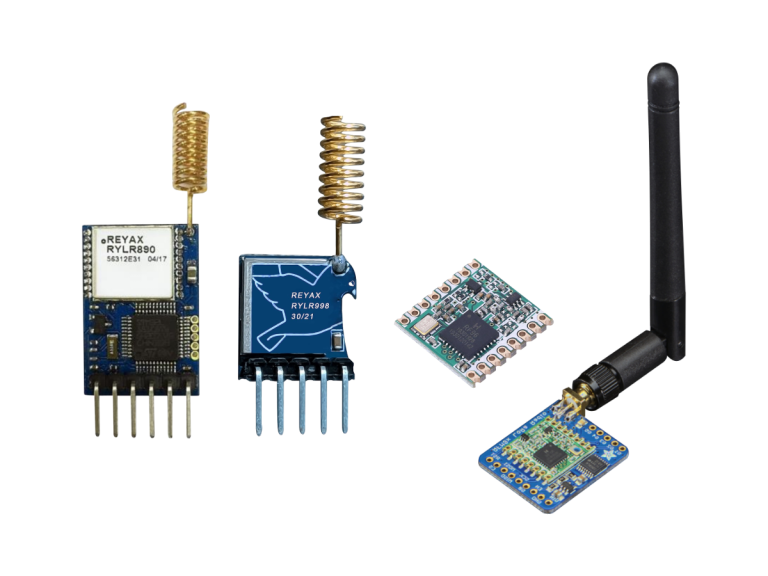
LoRa and LoRaWAN open up a world of wireless possibilities for students and innovators. With just a few cheap modules and antennas, you could create a network that spans your campus or hometown, monitoring anything from plant moisture to parking spaces. The tech community is friendly and full of resources (for example, open communities like The Things Network), so you can start playing with LoRa right away.
Think of building your own LoRa sensor network as an engineering adventure: you’ll learn about radios, microcontrollers, and cloud servers all in one project. Maybe your first LoRa node is a simple temperature sensor on the roof, sending data to your phone. Or perhaps you’ll design a wildlife tracker to study birds from afar. The point is that LoRa’s long reach and low power make remote wireless projects feasible for beginners and experts alike. So get excited about LoRa’s potential – the future of IoT is wide-open, and you can be one of the pioneers crafting the next generation of smart devices and systems.