Hey buddy…do you want to publish articles like this on gbhardwaj.com?
If yes, then send your article (with images) to gauravbhardwaj@rjit.ac.in
Also, scan the QR code or click the link below to join the WhatsApp group for regular updates.
https://chat.whatsapp.com/ISKFnc0OvoM1W7bAvybWPG

Getting Started with the ESP32 Microcontroller
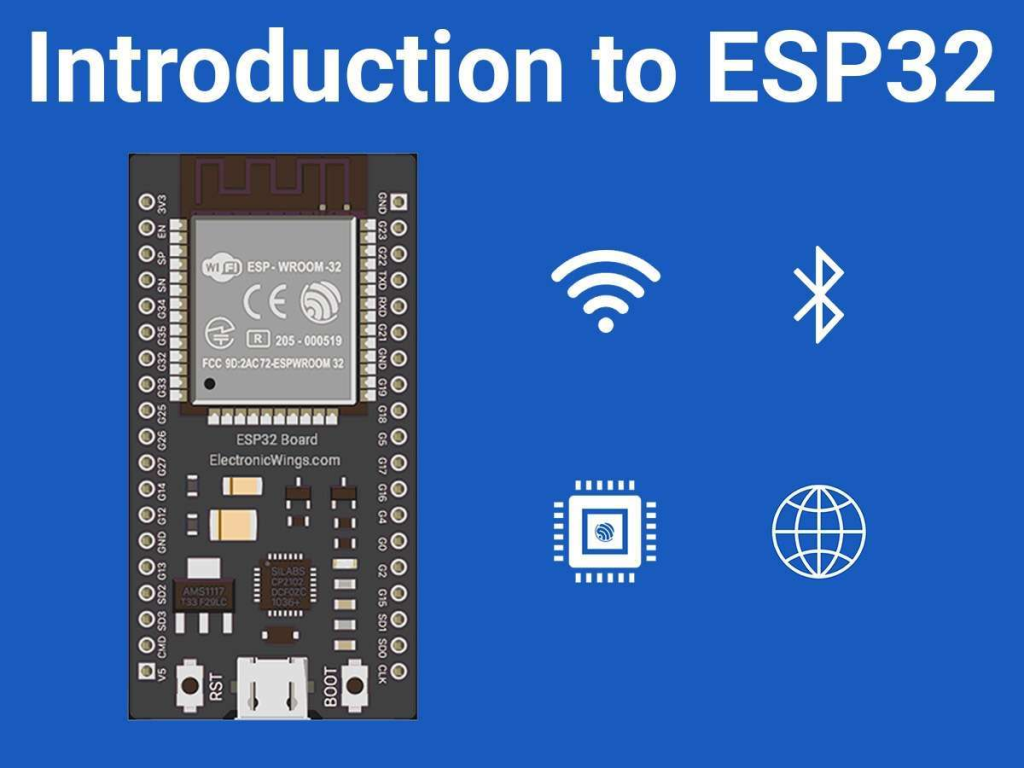
The ESP32 is a powerful 32-bit microcontroller series that comes with built-in Wi-Fi and Bluetooth connectivity. It was designed by Espressif Systems as the successor to the popular ESP8266, and it adds many useful features. For example, the ESP32 supports both Bluetooth (classic + BLE) and Wi-Fi, whereas the ESP8266 had only Wi-Fi. The ESP32 also uses a fast dual‑core CPU (up to 240 MHz) and includes special ultra-low-power modes for battery-powered project. Because of its low cost, small size, and energy-efficient design, the ESP32 SoC (system-on-chip) offers great value and is well suited for a wide range of Internet of Things (IoT) applications.
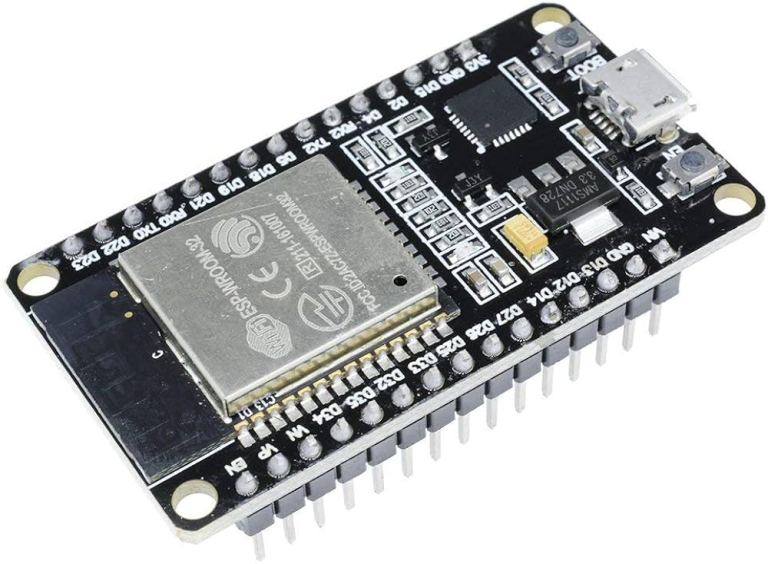
The board above is an example of an ESP32 development kit. Such kits include the ESP32 module (with a metal Wi-Fi/Bluetooth chip on it), a micro-USB port for programming, and many pins for connecting sensors, LEDs, motors, and other gadgets. In practice, this means you can plug the board into your computer’s USB port and upload programs easily. These development boards are very cheap (often just a few hundred rupees) and beginner-friendly. In fact, Espressif provides an “Arduino core” for the ESP32 so it works with the familiar Arduino IDE and libraries. (You can also program it in Python using MicroPython, or use other tools.) The large online community has created many tutorials and example projects, so students can quickly find code to start from.
Key Features
The ESP32 packs many useful hardware features into a tiny chip. Some key highlights include:
-
Dual-core CPU – Two 32-bit Tensilica LX6 processors (each up to 240 MHz). This gives plenty of speed for handling sensors, communication, or complex calculations.
-
Wi-Fi and Bluetooth – Built-in IEEE 802.11 b/g/n Wi-Fi and Bluetooth 4.2 (Classic + BLE). This allows the ESP32 to connect to wireless networks or pair with smartphones and other devices without any extra parts.
-
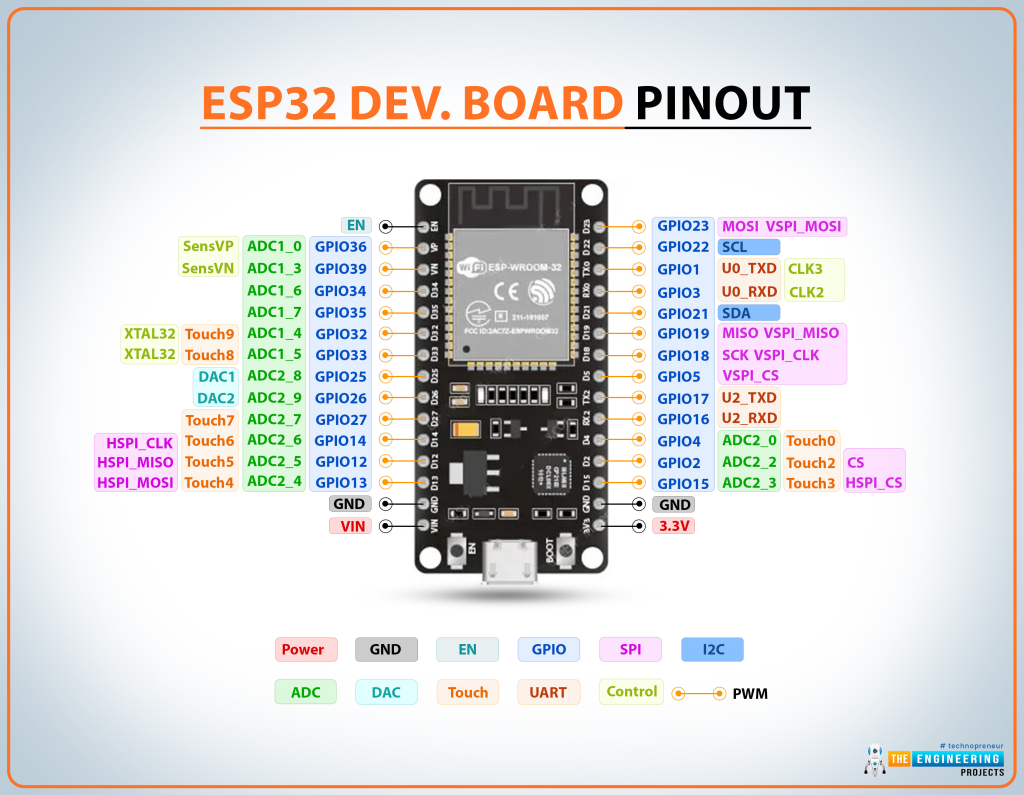
Rich I/O and sensors – Dozens of general-purpose I/O pins are available, with on-chip peripherals like analog-to-digital converters (ADCs), digital-to-analog converters (DACs), capacitive touch sensors, PWM outputs, and standard interfaces (SPI, I²C, UART, CAN, etc.). This lets you hook up buttons, sensors, displays, motors, and more.
-
Low-power modes – The ESP32 includes a low-power co-processor and sleep modes (down to just a few microamps). This makes it ideal for battery-powered or remote sensors that need to run for a long time.
-
(Advanced) Security blocks – (For IoT use) hardware acceleration for AES, SHA, RSA, etc., plus secure boot and encrypted flash support. This helps protect your data and code.
These features make the ESP32 a very capable “brain” for electronics projects. It can handle real-time tasks, wirelessly communicate data, and interface with many types of hardware all at once.
Programming the ESP32
Programming the ESP32 is almost as easy as programming an Arduino. Espressif provides an Arduino-ESP SDK (core) that integrates with the Arduino IDE, so you can write code in Arduino’s C/C++ style and use familiar libraries and examples. In other words, once you install the ESP32 board package in the Arduino IDE, the ESP32 appears as an option and you can upload sketches just like on other Arduino boards. If you prefer Python, you can also run MicroPython on the ESP32 – this allows you to write Python scripts for the chip and is great for beginners. More advanced users can use Espressif’s official ESP-IDF framework (in C) for full control. Programming usually involves simply selecting the ESP32 board in the IDE, writing your code, and clicking Upload; the IDE handles compiling and flashing the code over USB. Plenty of example code (blinking LEDs, reading sensors, connecting to Wi-Fi, etc.) is available to help you get started quickly.
Applications and Use Cases
Because of its wireless connectivity and power, the ESP32 is used in many different domains. It is especially popular in the Internet of Things (IoT). For example, ESP32 modules are often found in smart industrial devices (like PLC controllers), wearable health or fitness gadgets, smart energy devices (thermostats, solar monitors), and security systems (cameras, smart locks). Hobbyists use ESP32 boards in home automation projects (controlling lights, fans, home sensors), environmental sensors (weather stations, plant monitors), robotics (drones, rovers, DIY robots), and even art or music installations. Its Wi-Fi lets devices connect to the internet or local networks, and its Bluetooth lets it talk to phones or wireless sensors. For instance, you could build a weather station that sends data to your phone, a robot you control over Wi-Fi, or an IoT gadget that logs sensor readings to the cloud. In short, anything that needs a small computer with networking can use the ESP32, from smart home appliances to portable wearables.
Conclusion
With the ESP32, students have a powerful toolkit to turn ideas into real projects. The ESP32 “has gained a reputation as the ultimate chip for hobbyists and IoT developers”, meaning it’s perfect for learning and experimenting. Now is a great time to start building: try a simple experiment like blinking an LED, reading a temperature sensor, or making the board host a tiny web page on your home network. Each project will teach you more about electronics, programming, and how embedded systems work. In doing these projects, keep in mind that the ESP32’s strength is in combining sensors, computation, and connectivity – so aim to connect your gadgets to each other or to the cloud. The only limit is your imagination; with the ESP32’s capabilities, you can explore fields from home automation to robotics and create devices that solve real problems. As you practice and learn, you might even develop your own innovative product. In short, the ESP32 opens the door to a world of projects – it’s up to you to take the first steps and start exploring.